Future Trends in Food Processing: How Smart Dehydration Equipment Is Transforming the Industry

Are you wondering how modern food processing technology helps keep your favourite processed comfort food such as dry snacks fresh and nutritious? The answer is the smart dehydration equipment that the entire food processing sector has recently adopted.

Historically, processed food was considered inferior to whole food. Not anymore.

Modern dehydration equipment comes equipped with automated sensors and clever, data-driven programming, allowing it to dry food faster while ensuring the food’s nutrient content remains intact.

There are additional benefits in store for food processing plants that adopt the latest-generation food dehydration equipment. For instance, processed food manufacturers can drastically reduce raw material waste.

The Rise of Intelligent Drying Solutions

The driving force behind the next generation of dehydration equipment in India is equipment manufacturers’ decision to incorporate the Internet of Things (IoT) and smart algorithms into modern machinery. Dehydrating food used to mean blasting it with heat until all its moisture was lost. That has changed, as is apparent in the following sections, which cite the many unique features of modern food dehydration equipment in India.

Food Processing Machinery

Precision Control and Better Nutrition

Traditional dehydration equipment strips food items of their vibrant colour, enticing texture, and essential nutrients by dehydrating them at high heat for extended periods.

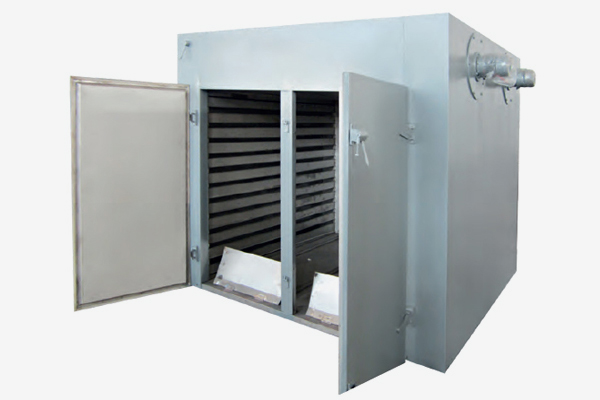
Modern-day food dehydration equipment, on the other hand, adjusts the airflow and temperature within the dehydration chamber on the fly. 

In this way, by using modern dehydration equipment, a company can ensure that the processed food items leaving its factories are not only crispy and delicious but also retain 90% of their original nutrients.

Energy Efficiency and Sustainability

One of the largest energy consumers is the food processing sector. That is slowly but surely changing thanks to the latest generation of dehydration equipment available these days.

Modern dehydration equipment can track the moisture content in the dehydration chamber. This is why, when the preselected humidity thresholds are met, the equipment can shut itself off, thereby significantly reducing the plant’s power requirements. In addition to meeting energy efficiency goals, modern dehydration equipment can prevent over-drying of food items while reducing the plant’s carbon footprint.

Meeting Regional Demands

Thanks to the latest generation of dehydration equipment, local businesses can now bring regional produce to the world stage, helping the farming community reduce post-harvest losses.

A Smarter, Tastier Future for Food Tech

This is the age of automation. Every known sector has adopted automation as part of its core procedures. The food processing sector is no different. With the help of automation, such as smart drying technology, the food processing sector will gradually become more precise and sustainable.

The best part is that back in the day, food dehydration technology was expensive. Not anymore. The prices have come down, making dehydration equipment accessible to both large labels and small- to medium-scale enterprises planning to make their mark in the processed food sector.

If you, too, own a food processing plant and want to upgrade existing equipment with the latest models featuring smart drying technology, connect with GEM Foodtech. We offer a range of dehydration equipment that can readily optimise your plant’s yield, protect the quality of processed food items, and, in the process, keep your brand ahead of the competitive curve.

How Mango Processing Plant Equipment Preserves Mango Pulp Quality and Shelf Life

Mango pulp tastes delicious. However, the right processing method may help ensure it retains its fresh aroma and golden colour. It is also important to have naturally sweetened mango. If the quality is poor, it may result in dull, flat products that become spoiled easily. Processors and manufacturers need to choose the right mango processing plant machinery to keep the production line smooth. Having the best equipment usually does much more than moving the fruits from one location to another. It helps protect the flavour and nutritional value while increasing shelf life, as it is seasonal produce. 

Steps to Take to Preserve Quality and Shelf Life of Mango Pulp Using the Right Equipment

Washing and Categorising the Mangoes Carefully

To preserve pulp quality, the process may begin much earlier than pulping the mango. It is better to choose high-quality mango washers and mango sorting tables to keep everything organised. During the process, it may be possible to remove the dirt and debris. It becomes possible to separate under-ripe and damaged fruits, as it can ruin the entire batch. Experts use machinery to ensure that only high-quality mangoes enter the manufacturing plant line. Taking the measure early may help maintain the consistency and flavour of the mango pulp. It can definitely reduce the chance of spoilage down the production line.

Mango Processing machinery

Gentle Pulping for Securing Flavour and Colour

Both the pulp and refining stages play an important role in safeguarding quality and extending shelf life. Using an efficiently designed extraction machine may help properly separate the pulp from the skin. The levels of heat and aeration are kept to a minimum, as both can hamper the aroma, colour, and flavour of the mango pulp. Controlled, gentle processing ensures a smooth, vibrant pulp. It allows the fruit’s natural character to be retained. It does not become oxidised or thin. 

Pasteurisation Guarantees Safer and Longer Shelf Life

One of the best ways to extend the shelf life of mango pulp is pasteurisation. Heating the liquid to the right temperature for the set time destroys microorganisms that can cause spoilage. Experts recommend using modern machinery to achieve more uniform, faster results. It may be possible to get stable, safe products without them overcooking or losing their taste completely.

Keep the Pulp Fresh Using Aseptic Filling

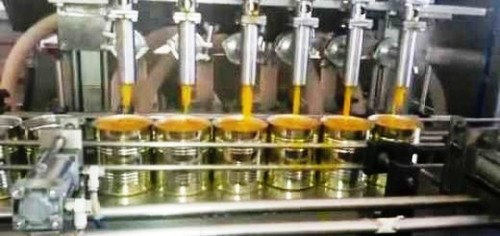
Once the pulp is pasteurised, it must be packed immediately to prevent contamination. Filling the liquid into a bag in a sterile, sealed environment helps keep it away from air and bacteria. It may also allow the pulp to be stored for longer. If required, it can be exported. On occasion, it may not require any added preservative or refrigeration.

Controlled Temperature from Start to Finish

Consistent temperature keeps everything together. Cold storage and chillers may help reduce the enzyme’s activity. Freshness, nutritional value and colour of the pulp can be maintained.

When a single machine is used, it cannot ensure the shelf life and quality of the mango pulp. Instead, it is better to look for a mango processing plant with an entire equipment line. Talk to the experts at GEM Foodtech to get an idea of the machinery required to produce mango pulp with ease.

Which Features Should Ideal Chilli Processing Machinery Have?

For maximum profits and market penetration, it is best to invest in chilli processing plant equipment with features such as automated cleaning, precision grinding, and integrated moisture control. Additionally, one must prioritise equipment with stainless-steel construction for a competitive edge.

Which Features Make Chilli Processing Equipment Desirable?

Processing chillies is not easy. One has to make sure their plant has equipment that can delicately perform a balancing act every day.

They would have to deal with volatile, very pungent capsaicin. At the same time, a consistent moisture level and particle size must be maintained.

That is why, when choosing the chilli processing plant equipment in India, one must ensure the machines include the following features.

High-Efficiency Cleaning and De-stoning

Before farm fresh chillies can be processed into the many products your brand makes, the onsite equipment should have integrated multi-stage cleaning systems.

For the best results, choose equipment that combines air aspiration and vibration to remove stones, dust, and stalks from raw produce.

Is this that important a consideration?

Of course it is.

You see, the presence of any foreign debris can not only damage the plant equipment but also can contaminate the final product! If you do not want to tarnish your brand’s image, select equipment that is OEM-equipped with cleaning and de-stoning features.

Chilli Processing Machinery in India

Precision Drying and Moisture Regulation

Processed chilli products can spoil before their expiration date if they are not made in a moisture-controlled environment. Additionally, one must ensure that the equipment in their chilli processing plant includes industrial dryers.

On top of that, the dryers should be capable of generating uniform airflow to reduce moisture content in the raw material while maintaining the recommended level (usually 10%) required for grinding.

Ideally, invest in chilli processing equipment that includes real-time monitoring. In this way, the growth of aflatoxins can be prevented in the raw, semi-processed and final product(s).

Why Source The Best?

In short, to produce chilli products that meet global standards, thus making them attractive to local, national and international markets.

You have to remember that the spice trade is a global, highly lucrative sector. As there is a huge demand for India-made chilli in the international market, to carve a niche for your brand, you have to install the best chilli processing plant machinery money can buy.

Future-Proof Your Business Today

When you choose the right machinery for your chilli processing plant, you are investing in boosting your brand’s reputation. That is why, invest in chilli processing equipment that does everything. For example, select a generation of chilli processing equipment capable of removing the last bit of grit to deliver a velvety-smooth powder.

At the same time, ensure the equipment is easy to dismantle for relocation and deep cleaning. Additionally, it is best to procure equipment made of food-grade stainless steel. That is quite the tall order, right? Thus, connect with leading chilli processing equipment suppliers such as GEM Foodtech.

That would be the best way to future-proof your business, don’t you think?

Common Challenges in Mango Processing and How Modern Units Solve Them

Are you planning to inaugurate a mango processing plant? Undoubtedly, it is one of the best business ideas, as the demand for mango pulp, juices, concentrates, and other value-added products is rapidly rising. For greater benefits, the right mango processing plant machinery is essential; however, understanding common problems and how modern units address them is mandatory. This helps you to make an informed decision and strengthens the core of your venture.

Common Challenges in the Mango Processing Plant Machinery and Ways  Modern Units Solve Them

Inconsistency in Raw Material Quality

One of the biggest challenges that every mango processing plant faces is the inconsistent raw materials. Mangoes come in various shapes, sizes, and ripeness levels. It affects the taste, texture, and quality of the final delivery.

  • Impact of Modern Units

Every piece of mango processing plant equipment can sort and grade mangoes based on their features and ripeness. Additionally, the peelers of these equipments focus on deriving the highest amount of edible products from them, leading to higher operational efficiency and reduced loss.

Mango processing plant machinery

Compromised Hygiene and Safety

Hygiene is non-negotiable in the food processing industry. Manual handling can lead to contamination, compromising hygiene and safety. This also leads to legal issues.

  • Impact of Modern Units

The latest mango processing plant equipment features stainless-steel components, automated cleaning systems, and closed processing lines. This helps maintain optimal hygiene standards, comply with international food safety standards, and gain consumer trust.

Lack of Operational Efficiency

A mango processing plant is a labour-intensive business. It requires a pool of human resources, which increases overall costs and leaves room for human error. Inconsistencies in labourers’ attendance impose additional pressure on the operation, and especially during peak seasons, it becomes difficult to handle.

  • Impact of Modern Units

Fully automated, the latest mango processing plant machinery eliminates the need for manual labour and handles every stage of production. From washing and slicing to pulping and packaging, each stage is streamlined, ensuring faster processing and consistent output.

Difficulty in Maintaining Product Consistency

To achieve significant profit margins in the mango processing industry and build a loyal consumer base, you must maintain product consistency. Due to an inconsistency in the raw material, the taste, colour, and texture vary from batch to batch. This uneven quality lowers the overall experience and tends to increase consumer turnout.

Impact of Modern Units

The sorting and grading techniques of modern equipment ensure consistency in raw materials. Moreover, efficient temperature control and standardised processing times on these advanced machines ensure consistent, optimal deliverables.

Investing in modern mango processing plant equipment is no longer optional; it is mandatory to achieve higher production and optimal quality. Incorporating mango processing plant machinery sets the early stone for your success and seamless operations by addressing the aforementioned common challenges.

Looking for a reliable vendor to buy mango processing plant equipment? Count on us. At GEM Foodtech, we have a range of the latest mango processing plants. These plants sort, grade, wash, peel, and extract the edible portion for making the products. Our mango pulp processing line ensures efficient extraction and a high-quality product.

Buy a mango processing plant now.

How Does a Modern Tomato Processing Plant Support Large-Scale Production?

Tomatoes are among the most widely used products in the food industry worldwide. They are refined into products such as sauces, ketchup, purees, pastes, and canned tomatoes. Food manufacturers use high processing capacities to meet the increasing demand. The current technology enables factories to process fresh tomatoes into finished products quickly, without loss of quality or safety. A good processing plant has impressive tomato processing plant equipment that automates various production processes. Washing, sorting, crushing, packaging, and all procedures are well handled to maintain uniformity. A modern tomato processing plant is used to ensure efficiency, reduce waste, and meet the demand of large food production.

From Fresh Harvest to Finished Products: The Power of Modern Processing

The production of tomatoes on a large scale requires an effective system and a well-planned workflow. The current processing plants are designed to handle high volumes of raw tomatoes while maintaining hygiene, ensuring quality, and producing quickly.

These facilities use automated technology and planned production lines to help food manufacturers convert fresh tomatoes into various processed products consistently and efficiently.

Tomato Processing Machinery

Efficient Raw Material Handling

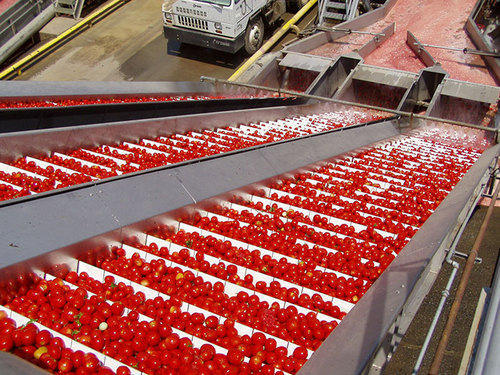
The first processing problem is handling large volumes of tomatoes. Contemporary plants have automated conveyors and sorting systems to handle the incoming tomatoes. These systems help eliminate spoiled and unripe fruits before the processing begins. Proper handling of raw materials ensures that only quality tomatoes are carried forward in the production process.

Advanced Cleaning and Sorting

In food processing, cleanliness is a necessity. The tomatoes are properly washed to remove dirt, debris, and pesticides. The tomatoes are then sorted in automated sorting machines using size and quality as the classification criteria. This is done to ensure that the end product meets industry standards and that the taste and texture are consistent.

High-Speed Processing Systems

In mass production, speed and efficiency are crucial issues. Current factories use powerful machinery to crush, pulp, and refine tomatoes quickly. Large-sized systems help companies to pack tomatoes with a high capacity of thousands of kilograms per hour. Modern Processing Plant and equipment will maintain a steady flow of operations and a uniform quality in the products.

Product Variety and Flexibility

There are various tomato-based products which a modern processing plant can generate. Tomato paste, puree, and sauces, as well as canned products, can be manufactured through different processing lines. Flexible systems enable producers to adjust production in accordance with market demand. This flexibility helps enterprises respond to varying consumer demands.

Looking for Advanced Tomato Processing Solutions Today?

Contemporary processing plants are crucial for addressing the increased demand for tomato-based products. High technology and effective processes enhance the speed and quality of production. With quality tomato processing plants in India, manufacturers can achieve large-scale production with high consistency, food safety, and product quality.

GEM Foodtech provides reliable and innovative solutions for modern food processing industries. Our advanced equipment and efficient systems help businesses achieve high production capacity and consistent product quality.

Which Tomato Processing Machinery Offers the Best ROI for Food Manufacturers?

The tomato processing industry is a sensitive division of the food manufacturing business, and efficiency, quality, and cost-effectiveness are the top priorities. The selection of appropriate machinery may greatly influence productivity, minimise waste, and encourage profitability. Automation, energy efficiency, maintenance costs, and production capacity are the factors that food manufacturers investing in tomato processing plant machinery must consider. The equipment available in the modern world not only enhances yield but also guarantees product quality, which is fundamental for maintaining brand image and client satisfaction. It is the ability of manufacturers to choose machinery that keeps costs and performance in check that will result in a faster break-even and faster operations, yielding increasing demand for tomato products in the market.

Key Machinery That Maximises ROI

There is a need to select appropriate tomato processing machinery to enhance efficiency, reduce losses, and improve profitability. The principal equipment with high returns is listed below:

Tomato Processing Plant

1. Tomato Sorting and Grading Machines

The sorting machine eliminates bad or unripe tomatoes, sending only good ones into the production system. Automation of grading improves accuracy, saves labour, and ensures the production of quality products.

2. Tomato Washing and Peeling Machines

Peeling and washing tomatoes saves labour and water, and it is an efficient method. These machines provide clean, uniform produce that can be processed, resulting in reduced downtime and enhanced throughput.

3. Crushing and Pulping Machines

Large-size crushers and pulpers are designed to maximise extraction and yield. With efficient machines, waste is minimised, energy is conserved, and the product’s nutritional value and texture are preserved, thereby increasing ROI in the long run.

4. Juice Extraction and Concentration Equipment

Pure Juice Evaporators and Juice extractors separate liquids and solids, concentrating products accordingly. High-tech technology reduces energy costs, increases production speed, and improves product uniformity in sausages, pastes, and other tomato products.

5. Canning and Packaging Lines

Automated canning and packaging lines are less susceptible to human intervention and contamination, thereby enhancing product shelf life. Reduced processing time and accurate portioning enhance efficiency and profitability.

6. Energy-Efficient Boilers and Heat Exchangers

Equipment such as boilers and heat exchangers is used to optimise energy. Efficient systems reduce operating expenses, have a minimal environmental impact, and improve overall ROI.

7. Integrated Control Systems

In modern tomato processing plants, it is common to have central control monitoring systems of production. The automation reduces error margins, enhances workflows, and maintains product uniformity, thereby increasing returns.

By investing in the right tomato processing plant machinery, food manufacturers can enhance production efficiency, reduce costs, and achieve a quicker return on investment while maintaining high-quality standards.

Is Your Machinery Delivering the Best Returns?

The selection of effective and dependable tomato processing plant machinery will guarantee high productivity, quality production, and low operational expenses.

You can maximise efficiency and profitability with GEM Foodtech. Our expert team provides state-of-the-art tomato processing machinery, tailored solutions, and ongoing support to optimise production. With our professional guidance and high-quality equipment, you can enhance output, reduce costs, and ensure consistent quality, making every investment worthwhile.